Evenings · Habits
How to stop doomscrolling at night
The short version
- You are not scrolling because you are weak. You are scrolling because your brain is too tired to choose and the feed is the only thing offering a next step.
- Willpower at midnight is the wrong tool. Friction and a substitute are the right ones.
- The reset is ten minutes: leave the room, do one physical thing, come back to a phone that is already boring.
- Design for the bad night, not the good one.
Nobody decides to spend ninety minutes reading arguments at 00:40. It happens because the decision was never made — the phone was simply the closest object when the day ended. That is the whole trick, and it is also the whole solution: change what is closest.
Why it happens at night specifically
By evening, the part of you that picks between options is tired. Scrolling is what remains when choosing feels expensive: every swipe is a decision made for you. The feed does not need your energy — that is precisely why it wins at 11pm and loses at 11am.
There is a second mechanism. A day that ended without a clear ending leaves a residue — something unfinished. The phone promises to close that loop. It never does, so you keep going, looking for the sentence that finishes the day.
You are not looking for content. You are looking for a place to put the day down.
The 10-minute reset
Do this once, tonight, and keep the order. It works because it separates the state from the object.
| Minute | Do this | Why it works |
|---|---|---|
| 0–1 | Stand up and put the phone face down where you were sitting — not in your pocket. | Breaks the hand-to-eye loop without asking you to give anything up. |
| 1–3 | Walk to another room. Drink a glass of water slowly. | Physical state change; water is the cheapest interruption that is also good for you. |
| 3–6 | One small physical task: dishes, fold three things, wipe a surface. | Gives the "unfinished day" a completion signal it can actually accept. |
| 6–9 | Write one sentence: “Today the loudest thing was ___.” | Externalises the loop instead of leaving it running in your head. |
| 9–10 | Plug the phone in outside the bedroom. Say out loud: “Done for today.” | The sentence is the ending the feed kept promising. |
Friction that you will actually keep
Advice to "just delete the apps" fails because it costs you something every day and pays you back never. Add friction that costs you once:
- Charge the phone in another room. One purchase, permanent effect — a longer cable and a second charger.
- Grayscale mode after 21:00. Same apps, 60% less pull. Most phones automate this in settings.
- Move the apps you open by reflex off the first screen. Not deleted — moved. You are adding three seconds, which is enough for the tired brain to choose otherwise.
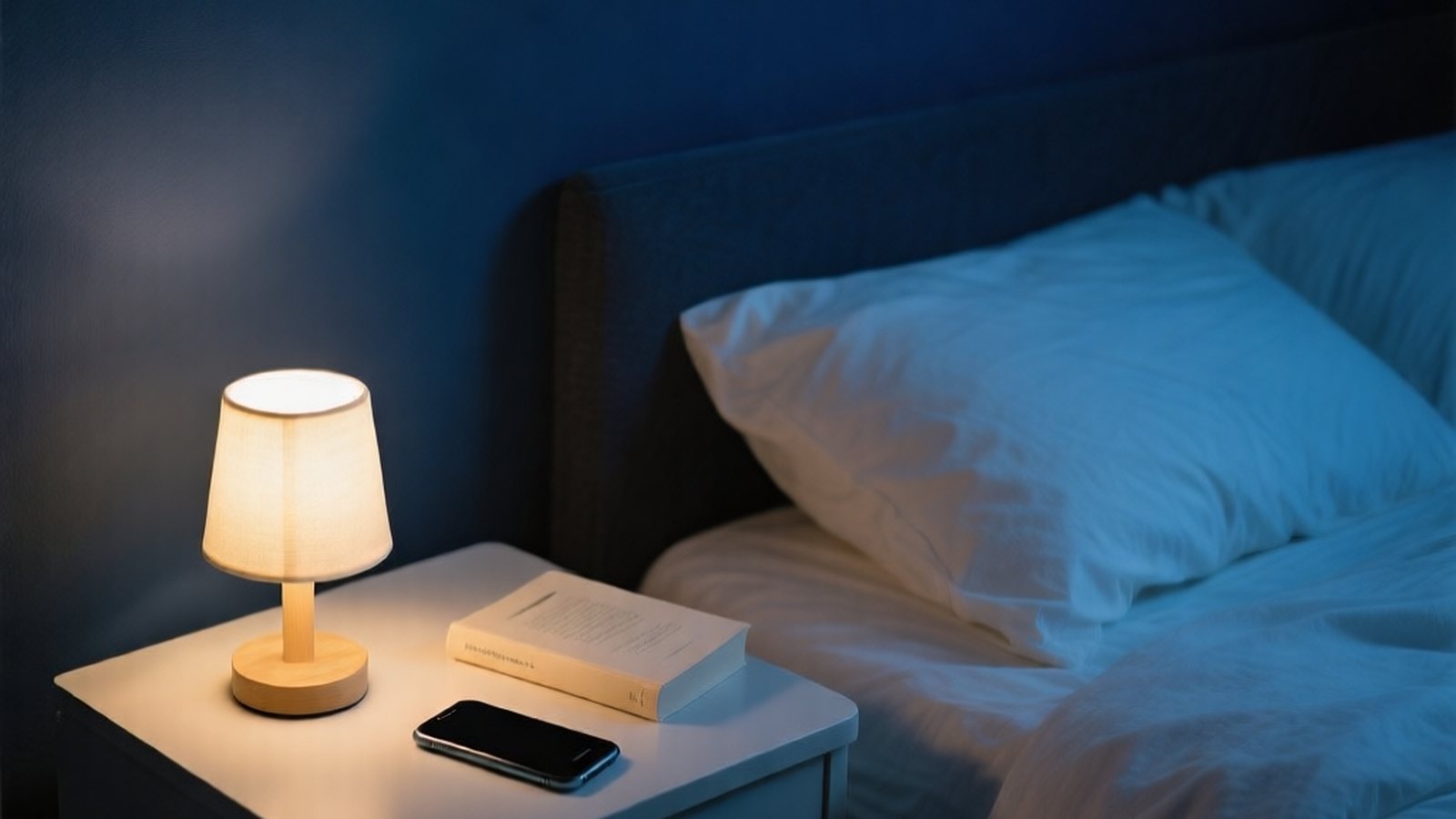
- Keep a physical book where the phone used to be. The substitute has to be within reach or the friction gets defeated.
- Set a "closing" alarm at the time you want the day to end — not a wake-up alarm.
When it fails
Some nights none of this works, and that is information rather than failure. Three states break the protocol, and each needs a different response:
- Storm (loud head, several urgent stories) — do not try to sleep through it. Body first: cold water on the wrists, feet on the floor, then the notebook.
- Ember (running on empty) — scrolling is your attempt at rest. Replace it with actual rest: lie down with no screen, even for ten minutes. It will feel worse before it feels better.
- Riptide (still moving fast) — you need discharge, not stillness. A walk, a shower, tidying one surface.
Take the 60-second quiz if you want to know which of those three you are tonight →
Free · printable
The 8-zone cheat sheet
One page: the anchor line, the breath and the smallest action for each of the eight states. Keep it next to the bed instead of the phone.
Get the free cheat sheet →FAQ
Is doomscrolling a disorder?
No — it is a habit shaped by product design. If scrolling is displacing sleep most nights and you cannot stop despite wanting to, that is worth raising with a clinician; this page is informational only.
Do apps that block other apps work?
They work while the motivation that installed them lasts. Friction you set up once (charger in another room) outlives motivation you have to summon nightly.
What if I need the phone as an alarm?
Buy a $10 alarm clock. It is the single highest-return sleep purchase in this article.
How long before it feels normal?
Most people report the "itch" fading after four or five nights, provided the phone is physically out of the room.